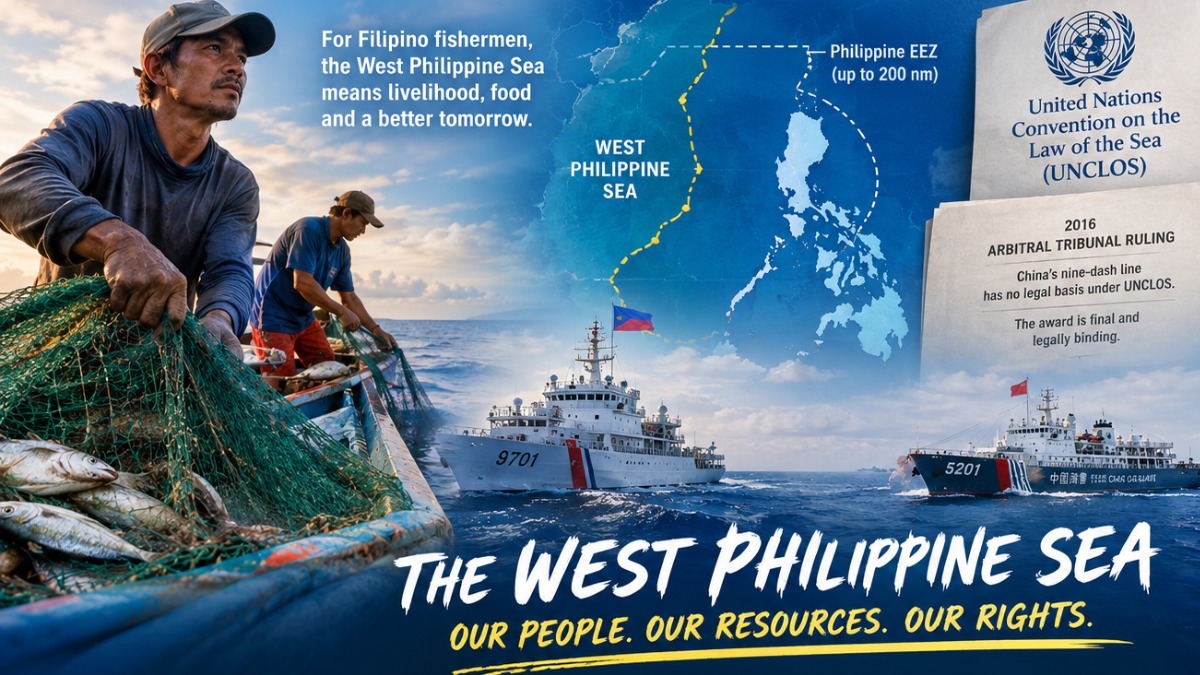
The West Philippine Sea has long been part of the daily lives of Filipino fishermen who depend on its waters for their livelihood. For many coastal communities, it is a source of food and income. For the country, it is an important maritime area connected to national security, economic development, and the protection of natural resources.
In recent years, the West Philippine Sea has received greater public attention because of continuing maritime disputes and encounters involving Philippine and Chinese vessels. These developments have raised questions about the country’s maritime rights and the importance of protecting its interests in the area.
Under the United Nations Convention on the Law of the Sea (UNCLOS), the Philippines has sovereign rights over natural resources within its Exclusive Economic Zone (EEZ), which generally extends up to 200 nautical miles from its baselines. These rights allow the country to explore, utilize, conserve, and manage resources found within its maritime zones, subject to international law.
One of the most important developments concerning the dispute was the ruling issued on 12 July 2016 by an international arbitral tribunal in the case filed by the Philippines against China. The tribunal found that China’s claims to historic rights over resources within its nine-dash line had no legal basis where they exceeded the maritime entitlements recognized under UNCLOS.
The ruling also addressed activities that interfered with the Philippines’ sovereign rights. Although China rejected the decision, the award remains final and legally binding on both countries under UNCLOS. The tribunal, however, did not decide questions of territorial sovereignty over disputed islands.
While discussions about the West Philippine Sea often focus on maritime patrols and diplomatic issues, its importance goes beyond these concerns. The waters support fishing communities, contain valuable marine ecosystems, and hold potential energy resources that could contribute to the country’s future needs.
For Filipino fishermen, access to traditional fishing grounds can mean the difference between a productive day at sea and returning home with little income. This is one reason why developments in the West Philippine Sea matter even to Filipinos who live far from the coast.
The issue also reminds us of the importance of being properly informed. With news and social media providing constant updates, the public must learn to distinguish verified information from misleading claims. Understanding the country’s maritime rights, particularly those recognized under UNCLOS, helps Filipinos better appreciate the issues involved.
Government agencies continue to carry out their respective responsibilities in maritime security, diplomacy, resource protection, and public information. These efforts form part of the country’s broader approach to addressing maritime concerns through lawful and peaceful means.
The West Philippine Sea is not simply a dispute over lines on a map. It concerns the people who earn their living from the sea, the resources that future generations may depend on, and the rights that the Philippines is entitled to exercise under international law.
As discussions and developments continue, one thing remains important: Filipinos should understand what is at stake and why the West Philippine Sea deserves their attention.
Protecting our maritime interests begins with knowing our rights and understanding their importance to the nation. (PAF)
About the Author